
The Patient’s Daily Acts of Charity
The Screwtape LettersThis flow traces the movement from imagined virtue and distant concern toward practical attention to the people around the patient.
increasing Bearing strength in each event
 decreasing
Bearing strength in each eventdecreasingSpiritual Concern for Others
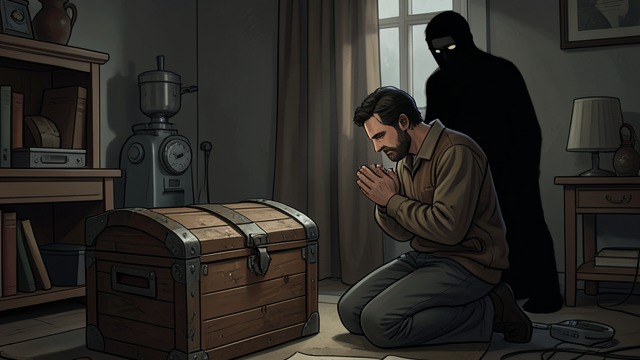
Good Intentions at a Distance
Prayer
The patient prays for his mother’s spiritual condition but may overlook her physical discomfort. His concern remains abstract and centered on what irritates him.
Limitation
The episode shows how religious language can fail to change ordinary behavior. The measure of care lies partly in whether it reaches the person nearby.
Virtue as Self-Monitoring

Feelings Instead of Neighbor
Measurement
The patient may try to create charitable feelings and then judge the prayer by whether he succeeds. His attention turns toward his own inner state.
Alternative
Screwtape fears the moment when the patient looks beyond himself toward God or the people he is meant to serve. Charity is more than a feeling he can manufacture.
Charity Under Domestic Strain

Care Tested at Home
Friction
The patient and his mother repeatedly misunderstand each other’s words and tones. Their intimacy gives resentment many opportunities to disguise itself as justified complaint.
Practice
A charitable response would involve attention to the actual person rather than the imagined offender. The letters show how difficult this becomes when grievance is habitual.
Responsibility to Neighbors

Concern Becomes Concrete
Service
The patient is forced to attend to neighbors and duties more directly than before. He finds that this outward engagement is more agreeable than he expected.
Transformation
Being taken out of himself counters self-absorption without requiring a display of spiritual emotion. Charity becomes an action within shared danger.
A Life Received by Others

The Wider Fellowship
Recognition
The patient discovers that he has never been isolated from spiritual companionship. His life’s apparently private moments are revealed as held within a larger community.
Completion
The final fellowship fulfills the direction of charity: distinct persons joined without possession. The patient’s earthly acts of attention belong to a reality greater than himself.
Soon after the patient’s conversion
During the patient’s early attempts at prayer
During repeated quarrels with his mother
As the patient undertakes wartime defense work
At the patient’s entrance into Heaven
